
10 Best Watch Pressure Testers Under $50 in 2026 for Reliable Water-Resistance Checks
A dependable pressure tester can help identify whether a watch case is likely to resist water before moisture causes costly damage. The best affordable models use controlled air pressure, clear chambers, and readable gauges to make basic checks easier.
We compared 10 watch pressure testers under $50 for pressure range, chamber design, ease of use, compatibility, and practical value for home users, hobbyists, and watch repair work.
Page Contents
- Best 10 Watch Pressure Testers Under 50 Picks for 2026
- Best Overall – Transparent Cylinder Watch Pressure Tester
- Best for Efficiency – Dual-Watch Waterproof Testing Machine
- Best for Two-Watch Testing – Dual Watch Pressure Tester
- Best for Controlled Testing – Manual Air Pressure Watch Tester
- Best Precision Pick – Professional Manual Watch Pressure Tester
- Best for Everyday Use – 10 Bar Watch Waterproof Tester
- Best Ergonomic Option – Dual Watch Waterproofness Tester
- Dual-Watch Professional Pick – 10-Bar Underwater Pressure Tester
- Durable Repair-Bench Choice – Watch Case Pressure Tester
- Compact Storage-Friendly Option – 0.3–0.6 Bar Watch Tester
- How We Picked the Best Watch Pressure Testers Under 50
- Quick Comparison
- Key Buying Factors for Watch Pressure Testers Under 50
- Who Should Buy Which Watch Pressure Testers Under 50?
- Read More Articles
- Best Watch Pressure Testers With Carrying Cases
- Best Watch Pressure Tester For Home Use
- Best Watch Pressure Testers For Hobbyists
- Best Watch Pressure Testers For Watchmakers
- Best Watch Pressure Testers For Small Workshops
- Best Watch Pressure Testers Under 100
- Best Watch Pressure Testers Under 300
- Best Belt Hangers
- Best Wooden Belt Hangers
- Best Metal Belt Hangers
Best 10 Watch Pressure Testers Under 50 Picks for 2026
Best Overall
Transparent Cylinder Watch Pressure Tester
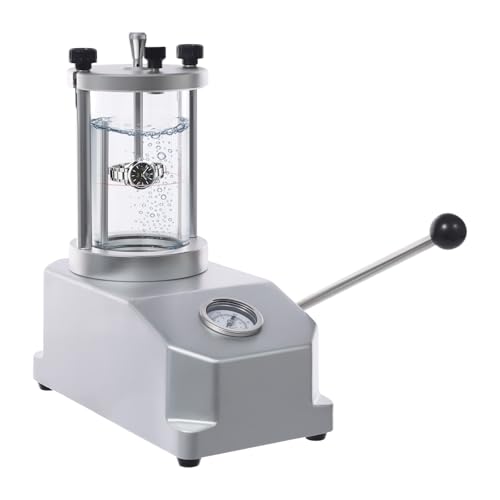
- 0.3–6.0 bar testing range
- Clear bubble-monitoring chamber
- Works with quartz and mechanical watches
Best For: Home users, watch shops, and repair benches
Best for Efficiency
Dual-Watch Waterproof Testing Machine

- Tests two watches simultaneously
- Large pressure gauge and glass chamber
- 0.3–6.0 bar operating range
Best For: Repairers handling repeated watch tests
Best for Two-Watch Testing
- Tests two watches together
- Visual bubble and oil-stain detection
- Ready to use with no assembly
Best For: Watch repair shops and advanced DIY users
Best for Controlled Testing
Manual Air Pressure Watch Tester
- Controlled manual pump and exhaust valve
- 0.3–6.0 bar gauge
- Transparent 2.6-inch cylinder
Best For: Advanced DIYers and professional repair work
Best Precision Pick
Professional Manual Watch Pressure Tester

- 0.3–6.0 bar air-pressure testing range
- Supports watches up to 2.6 inches wide
- Stable anti-slip, rounded-edge construction
Best For: Repair shops and enthusiasts needing a broad testing range
Best for Everyday Use
10 Bar Watch Waterproof Tester

- Tests two watches simultaneously
- Transparent cylinder and large pressure dial
- Compact 9.5 × 5.5 × 10.6-inch footprint
Best For: Repair benches handling multiple watches
Best Ergonomic Option
Dual Watch Waterproofness Tester
- Tests two watches simultaneously
- Long rubber handle supports a secure grip
- Glass and aluminum alloy construction
Best For: Users wanting comfortable manual dual-watch testing
Dual-Watch Professional Pick
10-Bar Underwater Pressure Tester

- Tests two watches simultaneously
- 0.3–0.6 bar air-pressure range
- Transparent cylinder and compact design
Best For: Watchmakers and repairers testing quartz or manual mechanical watches
Durable Repair-Bench Choice
- Glass and aluminum-alloy construction
- Tests two watches simultaneously
- Large analog dial and visible chamber
Best For: General watch repair and case water-resistance testing
Compact Storage-Friendly Option

- Compact 9.5 × 5.5 × 10.6-inch body
- Tests two watches at once
- Transparent cylinder and oversized gauge
Best For: Small workshops needing visible dual-watch testing
Best Overall – Transparent Cylinder Watch Pressure Tester
If you’re comparing watch pressure testers under 50, this model stands out for its transparent cylinder, broad 0.3–6.0 bar testing range, and straightforward manual operation. The glass, aluminum alloy, and rubber construction is suited to home benches, watch shops, and repair environments.
Best For: Buyers who want clear bubble detection and a compact tester for quartz and mechanical watches.
Pros:
- Transparent cylinder allows visual monitoring during testing.
- Supports 0.3–6.0 bar testing with a 10 bar maximum cylinder pressure.
- Manual shake lever and exhaust button require no assembly.
- Stable anti-slip foot pads and rounded edges support safer handling.
Cons:
- Its 3.4 kg weight may be more than casual users need.
- Testing is manual rather than automated.
With its clear viewing chamber and universal compatibility, this is a practical all-around choice for identifying leaks without adding complicated controls to your workspace.
Best for Efficiency – Dual-Watch Waterproof Testing Machine
Among watch pressure testers under 50, this machine is a useful option when testing throughput matters. Its transparent glass chamber, large pressure gauge, and ability to test two watches simultaneously make it well suited to repeated work.
Best For: Repairers who want to test two compatible watches at once and monitor pressure visually.
Pros:
- Supports simultaneous testing of two watches.
- Transparent chamber and large gauge aid visual pressure monitoring.
- Works within a 0.3–6.0 bar operating range.
- Rubber handle and stable base pads support comfortable operation.
Cons:
- Watch capacity is limited to a maximum 2.6-inch diameter and 2.8-inch height.
- No warranty is specified in the supplied details.
This model prioritizes efficiency and visibility, making it a sensible fit for repair environments handling multiple watches while staying within its stated size limits.
Best for Two-Watch Testing – Dual Watch Pressure Tester
For shoppers seeking watch pressure testers under 50 with a dual-watch setup, this tester combines a 0.3–6.0 bar range with a transparent cylinder for bubble and oil-stain observation. It arrives ready to use and fits most watches within its stated capacity.
Best For: Watchmakers and serious DIY users who value simultaneous testing and quick leak identification.
Pros:
- Tests two watches at the same time.
- Transparent cylinder helps reveal bubbles and oil stains.
- Accommodates watches up to 2.6 inches in diameter and 2.8 inches in height.
- Compact, no-assembly-required design includes a soft rubber handle and foot pads.
Cons:
- Capacity may not suit watches exceeding the stated dimensions.
- The supplied information notes possible 1–3 cm measurement variation.
This is a strong productivity-focused option for users who want a ready-to-use manual tester with clear visual feedback and space for two watches.
Best for Controlled Testing – Manual Air Pressure Watch Tester
This manual air pressure tester is a compelling choice among watch pressure testers under 50 for users who want controlled pressure application and release. Its 0.3–6.0 bar gauge, transparent cylinder, manual pump, and exhaust valve support a clear testing procedure.
Best For: Advanced DIYers, watch repair shops, and manufacturers seeking a manual shop-style testing setup.
Pros:
- Precise 0.3–6.0 bar pressure gauge suits quartz and mechanical watches.
- Transparent cylinder makes air bubbles easier to observe.
- Manual pump and exhaust valve provide controlled pressure and release.
- 10 bar maximum cylinder pressure exceeds the stated test range.
Cons:
- At 8.82 pounds, it is relatively heavy for a compact bench tool.
- Manual operation requires more hands-on effort than an automated system.
Its combination of controlled pressure handling, visible leak detection, and durable aluminum-alloy construction makes it a practical choice for users who prefer a traditional manual workflow.
Best Precision Pick – Professional Manual Watch Pressure Tester
If you’re comparing watch pressure testers under 50, this manual model stands out for its stated 0.3–6.0 bar air-pressure testing range and support for up to 10 bar cylinder pressure. Its transparent cylinder and pressure dial make it practical for checking the sealing of mechanical and quartz watches.
Best For: Watch repair shops, retail counters, and enthusiasts who want a sturdy, broad-range manual tester.
Pros:
- Offers a 0.3–6.0 bar air-pressure test range and up to 10 bar cylinder pressure.
- Aluminum alloy, glass, and rubber construction is designed for durable use.
- Fits watches up to 2.6 inches in diameter and 2.8 inches in height.
- Anti-slip feet and rounded edges support steadier, safer handling.
Cons:
- Manual operation requires the user to control the test pressure.
- The listed dimensions may not accommodate unusually large watch cases.
Choose this option when testing range and a stable benchtop design matter most. It is a practical fit for routine waterproofness checks without requiring complex setup or assembly.
Best for Everyday Use – 10 Bar Watch Waterproof Tester
Among watch pressure testers under 50, this model is worth considering if you need to test two watches at once. It combines a transparent glass cylinder, large pressure dial, and compact footprint for home, shop, or repair-bench use.
Best For: Users who prioritize testing two watches simultaneously and saving workspace.
Pros:
- Can test two watches at the same time to improve workflow efficiency.
- Transparent cylinder helps reveal where a case may not be waterproof.
- Accommodates watches up to 2.6 inches in diameter and 2.8 inches in height.
- Compact 9.5 × 5.5 × 10.6-inch design is easier to store in a small space.
Cons:
- The supplied notes list the air-pressure range as 0.3–0.6 bar, so the stated range should be checked carefully before purchase.
- At 8.8 pounds, it is not especially lightweight for frequent transport.
This is a sensible productivity-oriented choice for a repair shop or collector handling multiple watches. Its visual testing chamber and compact size add convenience, while the pressure-range specification deserves verification.
Best Ergonomic Option – Dual Watch Waterproofness Tester
For shoppers comparing watch pressure testers under 50, this tool combines dual-watch testing with a grippy, ergonomic handle. The aluminum-and-glass construction, transparent cylinder, and large dial provide a straightforward way to evaluate waterproofness on mechanical and quartz watches.
Best For: Home users and repair technicians who want comfortable manual operation and two-watch capacity.
Pros:
- Tests two watches at the same time for faster repeated checks.
- Soft rubber handle and long ergonomic grip are designed for easier operation.
- Sturdy glass and aluminum alloy construction supports regular workshop use.
- Fits most watches within the 2.6-inch diameter and 2.8-inch height limits.
Cons:
- The supplied air-pressure range is 0.3–0.6 bar, which may be limiting for some testing needs.
- Its 8.8-pound weight and 9.5 × 5.5 × 10.6-inch size reduce portability.
This model makes the most sense when handling comfort is a priority. It offers the same useful visual inspection features as comparable testers while adding a handle designed to reduce slipping and effort during manual testing.
Dual-Watch Professional Pick – 10-Bar Underwater Pressure Tester
If you need watch pressure testers under 50 for routine servicing or water-resistance checks, this manual tester offers a practical dual-watch setup. Its transparent cylinder and analog gauge make the testing process easy to monitor, while the compact aluminum-and-glass construction suits smaller workspaces.
Best For: Watchmakers and repairers who want to test two quartz or manual mechanical watches at once.
Pros:
- Tests two watches simultaneously for improved efficiency.
- Supports a 0.3–0.6 bar air-pressure range for different simulated underwater conditions.
- Fits watches up to 2.6 inches in diameter and 2.8 inches in height.
- Transparent cylinder, large dial, ergonomic handle, and compact footprint.
Cons:
- Manual operation requires the user to adjust and monitor pressure.
- Its 7.5-pound weight may be less convenient for frequent transport.
This is a strong choice when speed and visibility matter. The dual-watch capacity is especially useful for repair benches, while the included specifications and compact dimensions make it easier to plan storage.
Durable Repair-Bench Choice – Watch Case Pressure Tester
For shoppers comparing watch pressure testers under 50, this model focuses on straightforward operation and durable materials. The glass-and-aluminum body, visible test chamber, and large analog dial provide useful features for evaluating watch case water resistance.
Best For: Watch repair work involving most standard mechanical and quartz watch cases.
Pros:
- Glass and aluminum-alloy construction is designed for durability.
- Tests two watches at the same time.
- 0.3–0.6 bar pressure range simulates several underwater environments.
- Accommodates watches up to 2.6 inches in diameter and 2.8 inches in height.
Cons:
- The product information lists an analog display rather than a digital readout.
- At 7.5 pounds, it is better suited to a stationary bench than mobile use.
Choose this tester if you prioritize a sturdy build and simple visual monitoring. Its broad stated compatibility and dual-watch capacity make it a practical option for general repair tasks.
Compact Storage-Friendly Option – 0.3–0.6 Bar Watch Tester
This compact model is worth considering when comparing watch pressure testers under 50 for a home workshop or repair bench. It combines a transparent glass cylinder, oversized pressure gauge, and dual-watch testing with dimensions intended to minimize storage demands.
Best For: Users who need visible, simultaneous testing and want a tester that fits into a smaller workspace.
Pros:
- Supports simultaneous testing of two watches.
- Uses a 0.3–0.6 bar air-pressure range to simulate different waterproof scenarios.
- Transparent cylinder helps with visual monitoring during testing.
- Compact 9.5 × 5.5 × 10.6-inch body is easy to store.
Cons:
- The supplied notes do not specify the included handle design or detailed operating controls.
- The listed pressure range may require careful manual adjustment for each test.
This option stands out for its space-saving format and clear visual feedback. It is a sensible fit for users who want dual-watch testing without dedicating extensive bench space to the equipment.
How We Picked the Best Watch Pressure Testers Under 50
We focused on the features that matter most when checking watch cases on a budget: usable pressure range, gauge readability, chamber visibility, construction, operating simplicity, and compatibility with different case sizes. Models offering dual-watch testing or a wider pressure range can improve efficiency, while transparent cylinders make it easier to spot leaks or pressure changes.
These tools are generally intended for air-pressure testing rather than direct underwater testing. Always follow the manufacturer’s instructions and avoid exposing a watch to water unless the test procedure confirms that the case is suitable.
Quick Comparison
| Feature | What to look for | Why it matters |
|---|---|---|
| Pressure range | About 0.3–6 bar for general use; up to 10 bar for broader testing | Determines which watches and testing jobs the tool can handle |
| Chamber | Transparent cylinder with secure lid and seals | Helps you observe pressure behavior and inspect for leaks |
| Capacity | Single- or dual-watch design | Affects testing speed and workspace efficiency |
| Gauge | Clear, stable, easy-to-read dial | Improves consistency when applying pressure |
| Controls | Manual pump, valve, and pressure release | Makes testing easier to perform safely and repeatably |
Key Buying Factors for Watch Pressure Testers Under 50
Pressure Range and Intended Use
For routine checks on everyday watches, a 0.3–6 bar range is often sufficient. A 10-bar model may be more versatile for professional-style work, but higher capacity does not automatically mean better accuracy. Choose a range that matches the cases you expect to test.
Build Quality and Sealing
Look for a rigid chamber, smooth valve operation, a reliable pressure gauge, and replacement seals or readily available parts when possible. Poorly fitting lids or brittle components can produce misleading results.
Watch Fit and Visibility
Check the chamber dimensions and holder design before buying. A clear cylinder is useful because it lets you observe the watch during testing, while a dual-watch setup can save time when checking multiple pieces.
Ease of Operation
Manual testers should provide a straightforward pump, locking mechanism, and controlled release valve. Clear instructions are especially valuable for first-time users, since applying or releasing pressure too quickly can compromise the test.
Who Should Buy Which Watch Pressure Testers Under 50?
Home watch owners: Choose a compact, transparent single-watch tester with a moderate pressure range and simple controls.
Collectors and hobbyists: A 0.3–6 bar unit offers a useful balance of versatility, affordability, and manageable operation for regular checks.
Repair enthusiasts: Consider a sturdier model with a clearer gauge, better seals, and a wider range if you work on varied case types.
Small repair shops: A dual-watch or 10-bar tester may improve throughput, provided its chamber, fittings, and gauge are robust enough for frequent use.
Whichever model you select, treat an air-pressure result as one part of a water-resistance check. Case condition, crown and crystal seals, gaskets, and proper reassembly all affect real-world performance.