
10 Best Watch Timing Machines Under $200 for Accurate Mechanical Watch Testing in 2026
Finding a reliable watch timing machine under $200 can make mechanical watch diagnosis faster, more consistent, and far less dependent on guesswork. The best affordable timegraphers measure core performance data such as daily rate, beat error, and amplitude while remaining practical for home benches and small repair work.
This roundup compares 10 selected tools and related watch-testing equipment, including entry-level timegraphers, multifunction testers, demagnetizers, pressure testers, and supporting repair tools. Use the guide below to match features, workflow, and budget to the type of watch work you actually perform.
Page Contents
- Best 10 Watch Timing Machine Under 200 Picks for 2026
- Best Overall – YaeTek Multifunction Timegrapher
- Best for Computer Data – Mechanical Watch Calibrator
- Best Multi-Tool – Quartz and Demagnetizer Tester
- Best Movement Replacement – CHICHIYANG Miyota 8285 Movement
- Waterproof Testing Pick – Dual-Watch Pressure Tester
- Best for Everyday Use – Miyota 2035 Quartz Kit
- Timing Measurement Pick – LANRU No.1000 Timegrapher
- Best Hand-Setting Tool – Watch Hand Setting Presser
- Best Multifunction Timegrapher – USB/RS232 Watch Timing Machine
- Best Sound-Sensing Tester – Mechanical Watch Timegrapher
- How We Picked the Best Watch Timing Machine Under 200
- Quick Comparison
- Key Buying Factors for a Watch Timing Machine Under 200
- Who Should Buy Which Watch Timing Machine Under 200?
- Read More Articles
- Best Watch Timing Machines With Carrying Cases
- Best Watch Timing Machine For Home Use
- Best Watch Timing Machines For Hobbyists
- Best Watch Timing Machines For Watchmakers
- Best Watch Timing Machines For Small Workshops
- Best Watch Timing Machines Under 50
- Best Jewelry Magnifiers
- Best Illuminated Jewelry Magnifiers
- Best Folding Jewelry Magnifiers
- Best Jewelry Magnifiers With Multiple Magnification Levels
Best 10 Watch Timing Machine Under 200 Picks for 2026
Best Overall
YaeTek Multifunction Timegrapher
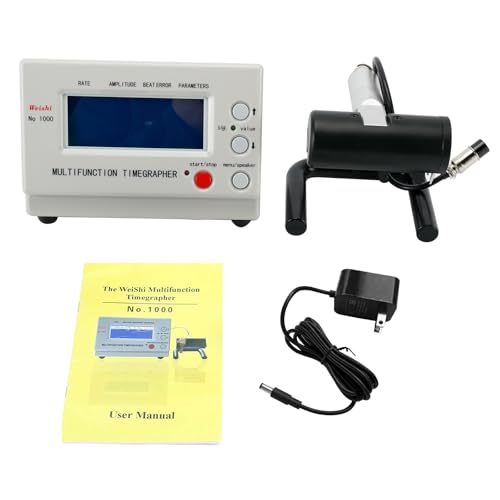
- Measures rate, amplitude, and beat error
- Six adjustable testing positions
- 2- to 60-second sampling periods
Best For: Mechanical-watch collectors and hobbyists
Best Multi-Tool
Quartz and Demagnetizer Tester

- Tests quartz movements and batteries
- Includes adjustable demagnetization
- Compact battery-powered design
Best For: Portable watch repair and service checks
Best Movement Replacement
CHICHIYANG Miyota 8285 Movement

- Automatic mechanical replacement movement
- Adds day and date functions
- Designed for compatible Miyota 8285 watches
Best For: Replacing a damaged compatible movement
Waterproof Testing Pick

- Tests two watches at once
- Transparent cylinder for leak inspection
- Compact manual design
Best For: Watch case water-resistance testing
Best for Everyday Use

- Includes two movements and shafts
- Compatible with Miyota 2035
- Batteries sold separately
Best For: Quartz movement replacement projects
Timing Measurement Pick

- Measures rate, amplitude, and beat error
- Selectable 2–60 second sampling
- LCD frequency diagram
Best For: Mechanical-watch timing diagnosis
Best Hand-Setting Tool

- Four interchangeable steel pins
- Three movement bases included
- Designed for controlled hand installation
Best For: Watch hand replacement and repair
Best Multifunction Timegrapher
USB/RS232 Watch Timing Machine

- Measures rate, amplitude, and beat error
- Supports USB/RS232 data transfer
- Adjustable clips fit varied dial sizes
Best For: Mechanical watch calibration and data analysis
Best Sound-Sensing Tester

- High-sensitivity vibration sensor
- Noise-reduction sound cavity
- Battery powered with headphone monitoring
Best For: Sound-based mechanical watch testing
Best Overall – YaeTek Multifunction Timegrapher
If you want a watch timing machine under 200 for routine mechanical-watch checks, the YaeTek Timegrapher offers a straightforward desktop setup. It automatically calculates rate, amplitude, and beat error, while the LCD displays live readings and moving lines that visually represent the watch’s sound.
Best For: Mechanical-watch collectors and hobbyists who want broad timing data and adjustable test positions.
Pros:
- Automatically measures rate, amplitude, and beat error.
- Supports six adjustable testing positions.
- Offers selectable sampling periods from 2 to 60 seconds.
- Includes an LCD screen with real-time readings and visual signal lines.
Cons:
- Its 1.37 kg weight makes it less portable than compact testers.
- The supplied specifications list a 110V-220V US plug, so buyers should confirm compatibility.
With its automatic signal adjustment and multiple sampling options, this is the most complete choice here for users focused on evaluating mechanical-watch performance rather than performing only a basic pulse or battery check.
Best for Computer Data – Mechanical Watch Calibrator
This compact mechanical watch calibrator is worth considering if you want a watch timing machine under 200 with computer-oriented data handling. Its guide rail transmits sound to the meter, adjustable clips hold different watch sizes, and the terminal supports transferring readings to compatible tablets, laptops, and desktops.
Best For: Users who want adjustable watch positioning and the option to transfer test data to a computer or compatible tablet.
Pros:
- Transfers data to compatible computers, tablets, and laptops.
- Adjustable sliding clips accommodate various watch sizes.
- Supports signal, frequency, and waveform measurements.
- Lightweight 3.99-ounce metal-body design.
Cons:
- The notes do not specify a display size or included computer software.
- Compatibility is described generally, so users should verify device support before buying.
This model stands out for connectivity and flexible holding hardware. It may suit a data-focused workflow, but the available specifications provide less detail about standalone screen operation than the dedicated LCD timegrapher above.
Best Multi-Tool – Quartz and Demagnetizer Tester
For buyers seeking a watch timing machine under 200 that also handles basic repair tasks, this compact multifunction tester combines demagnetization, quartz checking, battery testing, and pulse testing. It runs on two AA batteries, which are not included, and is designed for watchmakers and repair workers.
Best For: Watch repairers who need a portable tool for quartz, battery, pulse, and demagnetization checks.
Pros:
- Combines demagnetizer, quartz tester, battery tester, and pulse testing.
- Demagnetization speed is adjustable.
- Can test battery capacity without opening the watch case using pulse testing.
- Compact 151-gram design.
Cons:
- Two 1.5V AA batteries are required but not included.
- It is a multifunction repair tester rather than a dedicated mechanical timegrapher with rate and beat-error readouts.
This is the most versatile option for quick service checks and demagnetization, especially when portability matters. Choose a dedicated timegrapher instead if your priority is detailed mechanical-watch regulation data.
Best Movement Replacement – CHICHIYANG Miyota 8285 Movement
CHICHIYANG Double Calendar Watch Movement, Automatic Mechanical Movement for Miyota 8285 Watch
Check Price On AmazonThis listing is not a watch timing machine under 200; it is a replacement automatic mechanical movement for compatible Miyota 8285 watches. Consider it only if your goal is to replace a damaged movement, not to measure rate, amplitude, beat error, battery capacity, or pulse performance.
Best For: Repairs requiring a replacement Miyota 8285-compatible double-calendar movement.
Pros:
- Provides central hours, minutes, and sweeping seconds.
- Includes day and date functions.
- Described as a lightweight replacement for a broken or old movement.
Cons:
- Does not test or measure watch timing.
- Compatibility is specifically described for Miyota 8285 watches.
- No manufacturer warranty is listed in the supplied details.
Because this product is a movement rather than a tester, it does not belong in a timing-machine shortlist for measurement work. It may still be useful to repairers who need the stated calendar movement functions and confirmed compatibility.
Waterproof Testing Pick – Dual-Watch Pressure Tester
If you need a watch timing machine under 200 for broader watch servicing, this manual underwater pressure tester focuses on checking case water resistance rather than movement timing. Its transparent cylinder, pressure dial, and dual-watch capacity make it practical for repair work involving quartz and mechanical watches.
Best For: Watch repairers who need to test two watch cases at once and inspect potential leaks visually.
Pros:
- Tests two watches simultaneously for improved efficiency.
- Supports watches up to 2.6 inches in diameter and 2.8 inches in height.
- Transparent glass cylinder helps reveal where a case may not be waterproof.
- Compact aluminum-and-glass construction with manual operation.
Cons:
- It tests water resistance, not timing accuracy or movement performance.
- The listed air-pressure range is 0.3–0.6 bar, so it is intended for pressure testing rather than a full timing-machine workflow.
This is a specialized companion tool for watch servicing. Choose it when waterproofing diagnostics matter more than measuring rate deviation, amplitude, or beat error.
Best for Everyday Use – Miyota 2035 Quartz Kit
For shoppers comparing a watch timing machine under 200 with basic repair supplies, this OTOTEC kit is a movement replacement set rather than a testing instrument. It includes two quartz movements and two shafts compatible with Miyota 2035 movements, making it suited to straightforward repair projects.
Best For: DIY enthusiasts and watchmakers replacing old or damaged Miyota 2035-compatible quartz movements.
Pros:
- Includes two quartz movements and two matching watch shafts.
- Designed for compatibility with Miyota 2035 quartz movements.
- Offers reliable, consistent quartz timekeeping according to the supplied notes.
- Metal construction is intended for long-lasting performance.
Cons:
- It is not a timing machine and does not measure rate, amplitude, or beat error.
- Batteries are not included.
- Compatibility is specifically centered on Miyota 2035 movements.
This kit makes sense when the repair requires replacing a quartz movement, but it should not be selected as a substitute for a timegrapher or mechanical-watch testing device.
Timing Measurement Pick – LANRU No.1000 Timegrapher
If your priority is a watch timing machine under 200 for mechanical-watch diagnosis, the LANRU No.1000 is the closest match in this roundup. It calculates rate deviation, amplitude, and beat error in real time while displaying the watch’s frequency diagram on its LCD screen.
Best For: Watch repairers and hobbyists evaluating mechanical-watch timing performance.
Pros:
- Automatically calculates rate deviation, amplitude, and beat error.
- Offers selectable sampling periods from 2 to 60 seconds.
- Displays a frequency diagram on the LCD screen.
- Can automatically adjust signal level for different watches.
Cons:
- The notes identify it as a tester for mechanical watches, so it is not presented as a general quartz-movement tester.
- Special beat rates may require manual selection.
- The supplied information does not confirm included accessories or a specific price.
Among these products, this is the purpose-built choice for timing analysis. Its adjustable sampling periods and real-time measurements give hobbyists useful diagnostic data during mechanical-watch regulation and repair.
Best Hand-Setting Tool – Watch Hand Setting Presser
If you are comparing a watch timing machine under 200, note that this product serves a different purpose: it is a hand-setting tool for installing or replacing watch hands. Its four interchangeable steel pins and three movement bases provide controlled handling for home repairs and workshop tasks.
Best For: Watch hand installation, replacement, and basic repair work.
Pros:
- Includes four removable, replaceable pins for different hand sizes.
- Steel construction with an oxidation-resistant finish is designed for repeated use.
- Ergonomic handle and straightforward pin swapping support controlled operation.
Cons:
- It is not a timing machine and does not measure rate, amplitude, or beat error.
- Its usefulness is focused on hand-setting rather than broader watch servicing.
This is a practical companion tool for watchmakers who need precise hand placement, but it should not be selected as a substitute for a mechanical watch timegrapher.
Best Multifunction Timegrapher – USB/RS232 Watch Timing Machine
For shoppers specifically seeking a watch timing machine under 200, this multifunction timegrapher is built to assess mechanical watch performance. It measures daily rate, amplitude, and beat error while also offering waveform and frequency-related settings for calibration work.
Best For: Mechanical watch calibration and users who want computer-based data transfer.
Pros:
- Supports readings including daily rate, amplitude, beat error, signal value, and waveform display.
- USB/RS232 connectivity enables data transfer to tablets, laptops, and desktops.
- Adjustable sliding clips accommodate different dial sizes during testing.
- An illuminated indicator helps show when the unit is powered on.
Cons:
- The supplied notes do not specify included accessories or software details.
- Its compact 3.94-by-2.36-by-1.97-inch size may require a stable setup for convenient use.
Among these options, this is the closest match to a full-featured timing machine, especially for buyers who want measurement functions and the option to move readings to a computer.
Best Sound-Sensing Tester – Mechanical Watch Timegrapher
This mechanical watch timing machine uses a high-sensitivity vibration sensor to capture a watch’s sound for testing. Its integrated circuitry, enclosed noise-reduction cavity, and sound-wave display make it a focused option for checking mechanical watch performance.
Best For: Hobbyists and repair users who want sound-based mechanical watch testing.
Pros:
- High-sensitivity sensor detects subtle watch vibrations.
- Enclosed cavity is designed to reduce noise and insulate sound.
- Headphone monitoring lets users listen to the amplified watch signal.
- Battery-powered design supports flexible placement during testing.
Cons:
- The supplied notes do not list specific measurement ranges or computer connectivity.
- It may offer less documented data-transfer functionality than the USB/RS232 model.
This is a straightforward choice for sound-based timing checks, particularly if headphone monitoring matters more to you than detailed computer integration.
How We Picked the Best Watch Timing Machine Under 200
We focused on tools that can support basic mechanical-watch regulation, troubleshooting, or repair work without moving into specialist pricing. The most important considerations were measurement usefulness, ease of operation, compatibility with common mechanical movements, display or recording capability, and the practicality of the included pickup, stand, or movement holders.
Because this selection also includes complementary watch tools, we separated true timing machines from equipment designed for demagnetizing, pressure testing, hand setting, or movement replacement. That distinction matters: a demagnetizer or water-resistance tester can be valuable, but it does not replace a timegrapher.
Quick Comparison
| Tool type | Best use | What to check |
|---|---|---|
| Basic timegrapher | Rate, beat error, and amplitude checks | Frequency support, readable display, stable pickup |
| Multifunction timegrapher | Home servicing and broader testing | Recording, signal modes, movement compatibility |
| Quartz tester | Pulse, battery, or demagnetization tasks | Quartz and mechanical functions are clearly specified |
| Pressure tester | Case water-resistance testing | Pressure range, seals, and operating procedure |
| Repair accessory | Hands, movements, or component replacement | Tip sizes, shaft compatibility, and included bases |
Key Buying Factors for a Watch Timing Machine Under 200
Measurements and Frequency Support
Prioritize a unit that measures daily rate, beat error, and amplitude. Confirm that its supported beat frequencies match the movements you service; common mechanical watches may use different frequencies, and limited compatibility can make readings unusable.
Pickup Quality and Stability
An acoustic sensor or pickup rail should hold the watch securely and capture a clean signal. A stable stand reduces inconsistent readings caused by vibration, loose positioning, or nearby noise. Look for a clear display and controls that are easy to use while adjusting a movement.
Workflow and Data Handling
If you regulate watches regularly, recording or computer-transfer features can help you compare positions and before-and-after results. For occasional checks, a simpler standalone model may be better value and easier to set up.
Know What It Cannot Test
A timegrapher evaluates movement timing; it does not prove water resistance, diagnose every escapement fault, or replace visual inspection. Add a pressure tester, demagnetizer, or hand-setting tool only when those functions fit your repair workflow.
Who Should Buy Which Watch Timing Machine Under 200?
For beginners and occasional owners: choose a straightforward timegrapher with a readable screen, common frequency support, and a simple acoustic pickup. It provides the essential information without unnecessary controls.
For hobbyist watchmakers: a multifunction model with recording, broader signal options, or computer connectivity can make regulation and troubleshooting more repeatable across several movements.
For repair-focused users: pair a suitable timegrapher with movement holders, hand-setting tools, and a demagnetizer. If water-resistance work is part of the job, select a dedicated pressure tester rather than treating timing data as proof of sealing.
Before buying, verify the listing’s specifications, included accessories, supported frequencies, and return policy. Under-$200 tools can vary considerably in build quality and documentation, so matching the instrument to your actual movements and repair tasks is more important than choosing the most feature-heavy model.